
Why Most Startups Fail at Distribution and How to Think About It Differently
Distribution is the moat most startups ignore. Here is what not to do.

Hi, I’m Suzanna 👋
Over the past few weeks, a lot of new people have joined this newsletter—welcome!
I write about how startups can actually make marketing drive results. Every week, I share case studies, breakdowns, and the playbooks behind marketing that scales.
If you’re new here and don’t want to miss future editions, you can subscribe here.
This week’s topic is a continuing conversation on helping you nail distribution.
P.S: This is a long read but it's worth it.
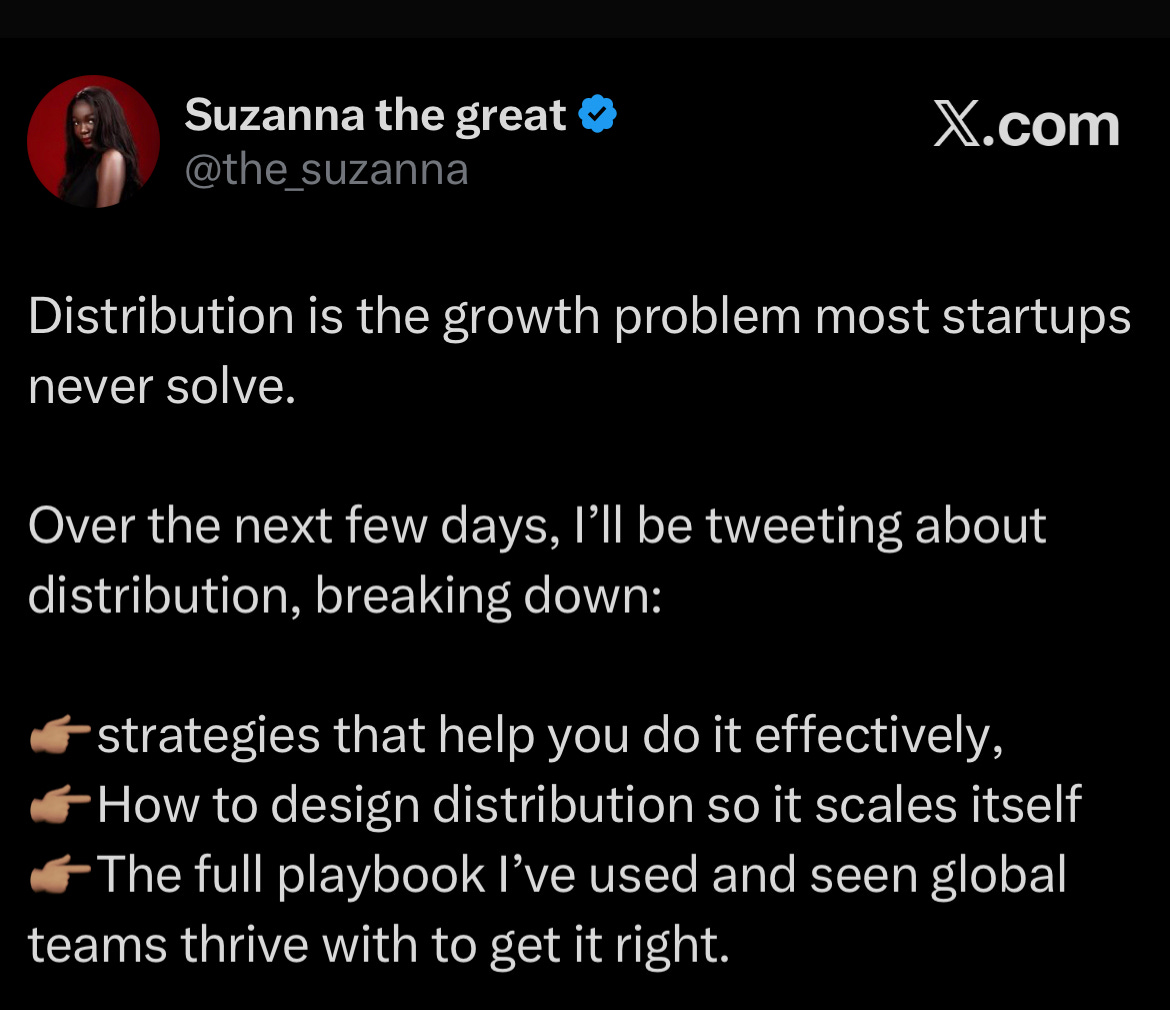
There isn’t nearly enough conversation online about distribution, yet it’s probably the single most important part of marketing.
This became obvious to me when I started tracing patterns in startup growth and failures.
Over and over, the same truth showed up: many of the recurring challenges founders face, especially in marketing, tie back to distribution.
Distribution is one of the most decisive drivers of startup success.
The evidence is consistent. Companies that scale massively almost always crack distribution early.
Whatever growth strategy they leaned on, it all came down to building a system that ensured the right people repeatedly encountered and adopted the product.
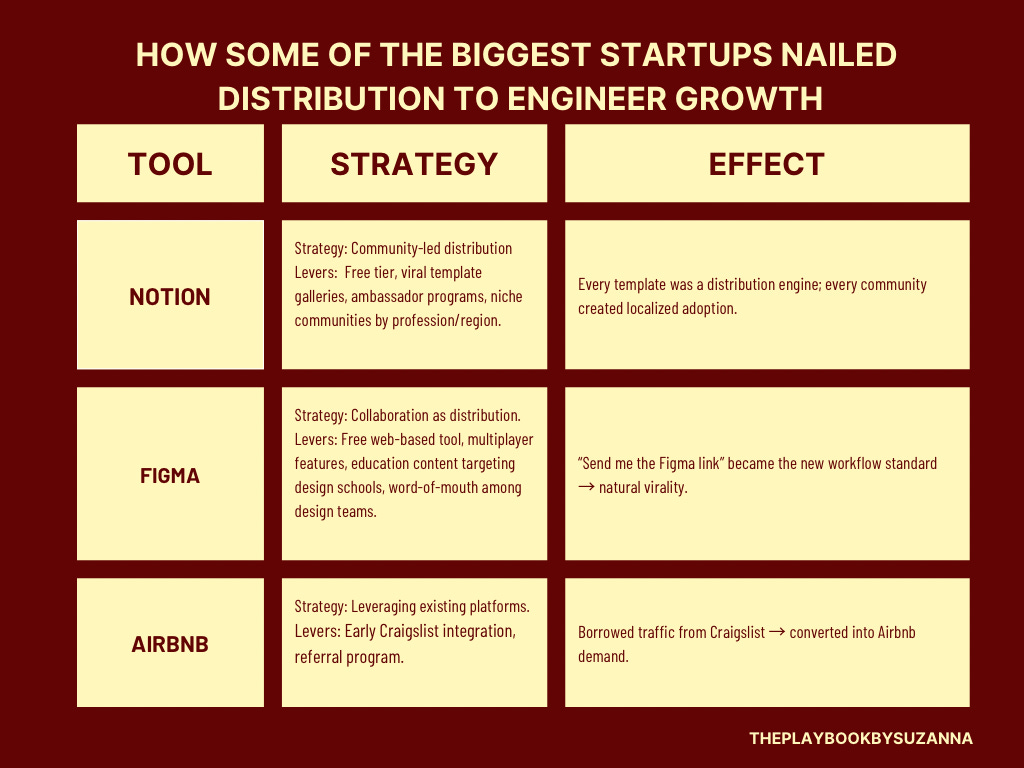
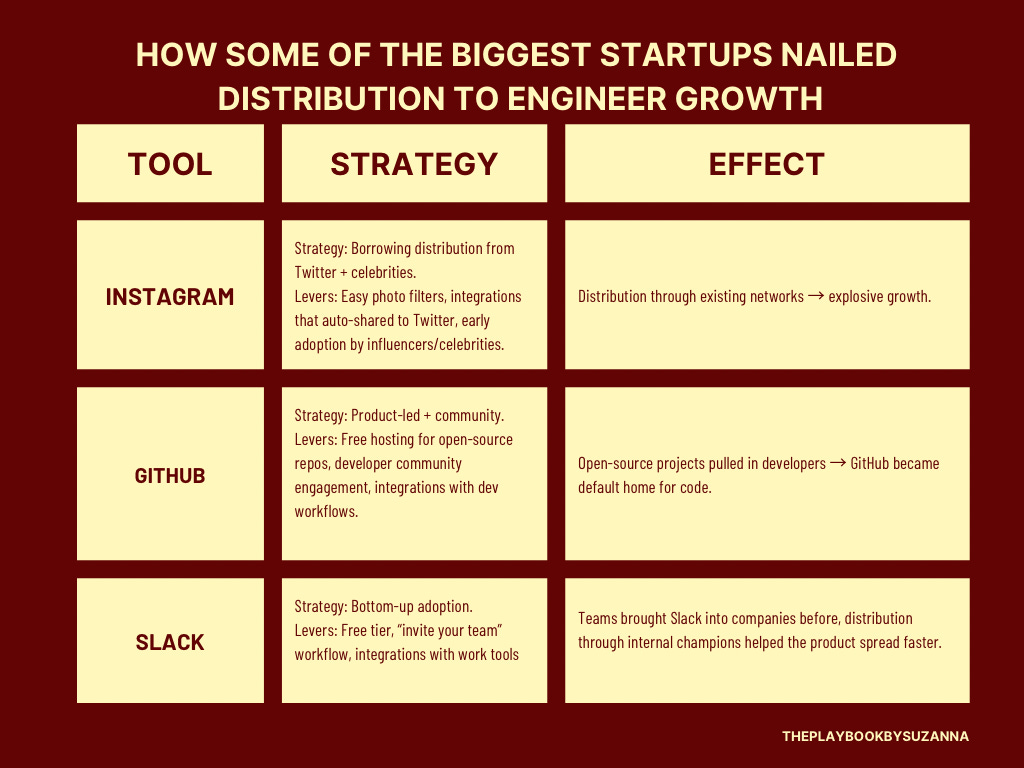
This distinction of what true distribution actually is, is important for founders and marketers to make:
Distribution is not repurposing the same content across multiple platforms.
It is not a one-off campaign or a paid push.
Distribution is intentional. It maps the pathways through which a product reaches its audience and exhausts every viable channel until that product becomes unavoidable to its target market.
So let’s start with the foundation: How to think about distribution.
The way you think about distribution determines whether your product quietly dies in a corner or scales into something people can’t ignore.
Rethinking Distribution
Most marketers still approach distribution with a campaign mindset. It goes like this:
Launch a campaign.
Put budget into ads.
Push content out.
Hope it reaches the right people.
Campaign ends → momentum fades.
Then the cycle repeats.
This creates a stop-start rhythm where growth is always tied to the next campaign.
The problem is that campaigns create spikes, not systems. They’re expensive, time-bound, and rarely compound.
Now contrast that with how distribution should be thought of not as an add-on, but as something baked into the product and strategy itself.
With this mindset, every feature, campaign, or piece of content doubles as a distribution channel.
Growth isn’t just what you do after launch, it’s built into the way the product spreads.
Thinking About Distribution as a Marketer
So how should marketers think about distribution differently?
1. Distribution Starts at Content Creation
You need to start thinking about distribution from the beginning as you are deciding what content to create.
You want to answer:
Where will this content live?
Who will share it and why?
How will people keep finding it a month or six months from now?
2. Leverage Networks and Gatekeepers
Every industry has hubs that control attention: communities, influencers, newsletters, podcasts, Slack groups.
Distribution-minded marketers figure out: “How can I tap into those existing networks instead of just relying on my brand’s owned channels?”
3. Build Loops, Not Campaigns
It’s not that campaigns are bad.
Campaigns drive spikes — awareness, signups, maybe even sales. But by design, a campaign ends.
When the budget is spent, when the posts stop going out, the momentum fades.
Loops, on the other hand, are systems.
You set them in motion once or refine them over time, and they keep running. They regenerate themselves because every new customer or participant adds energy back into the system.
Think of it like this:
A campaign is a firework — it goes up, explodes, grabs attention, then it’s gone.
A loop is a flywheel — it starts slow, but each push makes it spin faster, and soon it can sustain itself.
There is no need to choose between the two, the smart thing to do is to design campaigns that contain loops.
For example:
Instead of just doing another campaign that suddenly flatlines, create a quarterly industry report. People anticipate it every year, media covers it, and customers keep referencing it long after launch. The loop is baked into the campaign.
Instead of just running ads, layer in a referral or affiliate program so every new customer brings in more customers. Now the campaign has a self-sustaining engine.
Instead of hosting a one-off event, build a community space around it where people can keep talking and sharing long after the event is done.
The shift is this: even if you might not directly control or influence the product decisions, you do control the way your content, campaigns, and channels are designed to keep spreading and loops help you turn short-term spikes into long-term pull.
Distribution Is Not a Department: The Notion Case Study
When we look at companies like Notion or Figma, it’s easy to assume their distribution success was simply product-led.
Free tiers, integrations, collaboration features—yes, those played a role.
But the real magic happened when marketing and product worked together to turn those features into engines of reach.
Notion’s template galleries weren’t just coded as product features, they were marketing-led initiatives that showed users how the tool could fit into their workflows.
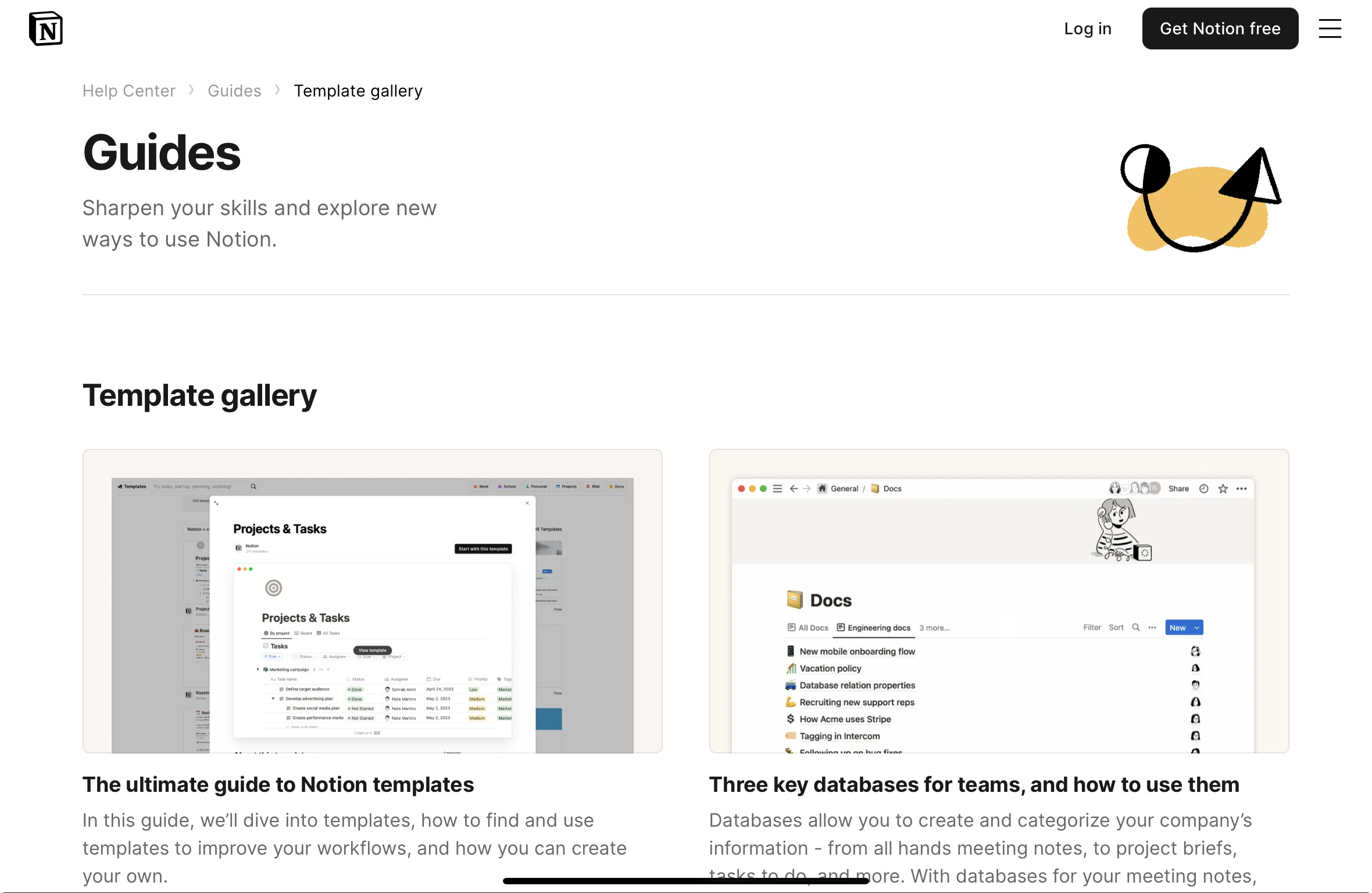
The same goes for Notion communities. The marketers built and nurtured them around professions, geographies, and niche interests.
In fact, many of their most powerful levers were marketing-driven:
Template galleries that gave people ready-made use cases
Communities built around roles, countries, and interests
Educational content and showcases that turned users into advocates
But marketing didn’t work in isolation:
The product team made the tool accessible, usable, and shareable
The marketing team created the narratives, assets, and communities that amplified it
The growth team designed loops and incentives that kept adoption compounding
Distribution is not owned by a single department. It’s a shared responsibility. It is every feature, every template, every campaign, every partnership, designed to work together as a system.
The Three Touchpoints of Distribution
1. Product-led Distribution
Free tiers or freemium models (let people try before they buy).
Built-in shareability (collaboration features, integrations).
Tools or dashboards that naturally get shared (reports, badges, widgets).
2. Marketing-led Distribution
Template galleries, playbooks, or libraries that show real use cases.
Communities (by role, geography, niche or interest) that anchor adoption.
Educational content, webinars, and industry reports that spread beyond owned channels.
Partnerships and co-marketing that embed the brand into existing ecosystems.
3. Growth-led Distribution
Referral programs and incentives that turn users into distributors.
Retargeting and nurture systems that keep users in the loop.
Conversion optimization so awareness translates into adoption.
When all three collaborate, distribution compounds.
None of these distribution levers are new.
If you look closely, nothing about distribution is truly new.
Marketers have run communities. Product teams have built features that encourage sharing. Growth teams have launched referral programs. These are all familiar tactics.
The real issue is that teams execute them in isolation.
A marketing team might be running webinars or building a community but they’re doing it without visibility into what the product team is shipping.
A product team might launch a new feature designed for collaboration, but marketing wasn’t involved early enough to design stickier adoption campaigns around it.
A growth team might design referral loops, but without marketing or product alignment, those loops never gain traction.
When each function works in silos, distribution becomes fragmented and you miss the opportunities to compound growth.
The difference in companies like Notion or Figma wasn’t that they invented new tactics, it was that their product, marketing, and growth functions worked interdependently, not independently.
Because they worked together, every feature, every community, and every campaign reinforced one another. This is what creates distribution loops that run almost on autopilot.
From Isolation to Integration
So how do you actually shift from fragmented plays to interconnected distribution?
It starts with one simple mindset shift:
When marketing is baked into how products are built and launched, and when the product is designed with marketing in mind, distribution becomes intentional. And intentional distribution compounds.
Here are a few ways to operationalize that across teams:
Cross-functional launch planning
Before a new feature is built, marketing sits in the room.
Product shares the roadmap.
Together, you ask: “How can this feature create sharing, stickiness, or discoverability?”
Marketing then designs campaigns, content, or communities that amplify that from day one.
Shared metrics, instead of siloed metrics
Instead of marketing chasing vanity numbers while product chases activation, define joint goals: “How many new users came from the loops we built together?”. This forces both teams to naturally collaborate because now, your success is shared.
When you treat distribution as a system, not a task for one team, you stop relying on random one-off campaigns. Instead, every feature, every piece of content, every community builds momentum for the next.
Interlooped Distribution Isn’t Just for Product-Led Companies
One of the points recently raised when I talked about this on Linkedin is that this only works if you’re product-led.
I get it — product-led companies naturally lean into loops, user journeys, and built-in distribution mechanics. But I believe sales-led products can adopt the same mindset.
Whether your GTM motion is sales-heavy or product-heavy, distribution still depends on people.
Humans still share, save, forward, recommend, and talk. That means the same “interconnected” principle applies.
For example, if you’re sales-led, your distribution loops might not look like in-app virality. But your sales conversations themselves can become distribution engines when tightly aligned with marketing and product.
A customer objection today can turn into tomorrow’s blog post, webinar, or case study if the sales, product, and marketing teams are working in sync.
That’s what I mean by interconnected distribution, you’re not shipping things in isolation, you’re feeding and amplifying each other.
6 Key Ways to Think About Distribution
Here’s the mental model I use when working with startups:
1. Distribution is not an afterthought.
One of the most common mistakes I see with startups, is treating distribution as something to figure out “later.”
The thinking goes: first we build, then we’ll grow.
But if distribution isn’t designed into the product from the very beginning, you’ll spend far more time and money forcing growth later.
Let's say you are building a collaboration tool as an example. If sharing a file, document, or invite automatically introduces new people to the product, distribution is happening silently in the background.
Every time someone sends a Calendly link, they’re not just scheduling a meeting, they’re distributing Calendly to a new potential user.
So now there needs to be a mindset shift from “how do we grow after launch? to ” “how will every feature we build help us reach the next user?”
2. Distribution is about leverage, not channels.
Another common trap founders and marketers fall into is equating “distribution” with “channels.”
Run some ads, dance on Tiktok, post on LinkedIn, send out emails and that’s it. But those are just vehicles.
The most important thing and what you should be concerned about is what leverage you have inside those channels which is why you need to find your closer channel early.
Think of Calendly. The leverage was that every time someone used the product, they introduced it to someone else, the email invites were simply the channel.
Or consider a founder with a strong personal brand.
The channel might be Twitter or LinkedIn, but the leverage is the trust and reach they already command.
So now you need to ask yourself: What is the unfair advantage in how we reach users?
Is it:
A founder with a strong personal brand?
A product that spreads through usage?
A partnership that gives you instant credibility and access to customers?
The best distribution play is the one that identifies the lever that makes your growth efforts compound.
3. Distribution is strategy, not luck.
I recently shared a tweet about the trap of open-loop marketing, where teams get caught up in the thrill of starting campaigns but never close the loop to drive actual results.
That same mindset shows up in how many founders and marketers think about distribution.
But smart teams don’t gamble on luck. They engineer distribution. You want to figure out:
How will new users consistently discover us?
What moments in the user journey can we turn into growth triggers?
How do we make every acquisition dollar compound into long-term pull, not just one-off spikes?
4. Picking Channels the Right Way.
Since leverage shows up through channels, how do you know which ones to pick?
I use this 3-part filter:
Audience Fit: Where does my target customer actually spend time?
Content Fit: Can we produce the kind of content that works on that channel?
Leverage Fit: Does this channel give us compounding reach (algorithms, network effects, partnerships)?
If you don’t hit at least two, you’ll burn energy.
This is why every startup has what I call a Closer Channel: the channel where your message lands hardest and moves people fastest from awareness → commitment.
For B2B SaaS, that might be LinkedIn content + founder DMs.
For consumer apps, it might be TikTok + word of mouth.
For dev tools, it might be Twitter + open-source communities.
The job is to find that Closer Channel, then craft the right message for it.
5. Message-Market Fit.
Finding the right channel is half the battle. The other half is getting the message to spread inside that channel.
You need to ask and have the answers for this:
What conversations are already happening here?
What language do my users use when they talk about their problems?
What kind of content spreads naturally here? (case studies on LinkedIn, memes on Twitter, tutorials on YouTube)
6. Borrowing Trust and Reach.
Sometimes the fastest way to reach your audience is by standing on someone else’s stage.
Your buyers already listen to someone. They follow creators, join communities, attend webinars, read newsletters. Instead of trying to pull them from scratch, figure out:
“Who already owns the attention of the people I want?”
And then, borrow that trust.
Some smart ways to do this:
Partnerships: Integrate with a bigger player so you show up where users already are.
Communities: Embedding in places where your audience hangs out — for example, sponsoring niche groups of events relevant to your ecosystem.
Creators & Influencers: Partnering with people who already have credibility in your market. For example, a dev tool featured in a well-known engineer’s thread is very likely to spread faster than 10 of your own posts.
Cross-Promotion: Co-host a webinar, guest-write a newsletter, or run a case study swap with another founder, adjacent product, business etc.
Wrapping Up: The Foundation of Distribution Thinking
We’ve just covered how to think about distribution, how to choose the right channels, how to find your message-market fit, and how to borrow trust to accelerate reach.
If you get these foundations right, you stop chasing random hacks and start playing a deliberate game.
Next Up: Building Repeatable Distribution Systems
In the next episode of this series, we’ll break down:
How to turn distribution wins into repeatable workflows
Why you need distribution systems, not one-off tactics
A framework for building processes that scale without burning you out
If this shifted how you think about distribution, here are two ways we can go deeper before the next issue drops:
Work with me 1:1 → I help SaaS companies design and execute content strategies that drive leads. If you want me to map this for your business, book a strategy sprint here.
Join the Waitlist → I’m recording a course on SaaS distribution, breaking down my exact frameworks. Get first access + early bird pricing when it launches. Join here
If you’re not yet subscribed, hit subscribe here so you don’t miss the next issue👇
Liked reading this and know someone else who needs to see it? Share the post